Developed and tested prototype
TrustEntry
A fully developed and tested applicant-registration prototype for seasonal bus-guide recruitment, built independently in Glide to stop duplicate and invalid applications at the point of entry.
Context
In 2024 I handled about 2,000 bus-guide applications for a Hajj season through a manual administrative process, working in Excel during an eight-day assignment. Duplicate applications and inconsistent information had to be found and corrected by hand. That experience is what led me to build TrustEntry.
The challenge
The aim was to move those checks to the point of entry. Instead of reconciling records afterwards, the application would check identification and mobile numbers as they are entered, refuse numbers that are already registered, and collect everything an application needs in one guided flow.
Why no-code
I chose Glide because it allowed me to translate an operational requirement into a working application without relying on conventional software development or an external development team. The platform let me concentrate on workflow design, data validation, the applicant’s experience and the administrative requirements, while building, testing and refining the solution myself.
It still took about two weeks of focused work: configuring the workflow, the validation rules, the conditional logic and the registration experience, then testing and refining each step.
What the prototype does
- Mobile-first, step-by-step registration
- Instructions in Arabic and English
- Format validation for Saudi national and resident identification numbers
- Duplicate prevention for identification numbers
- Applicant name collection
- Format validation and duplicate prevention for mobile numbers
- Personal photograph upload
- Nationality selection
- Identification card photograph upload
- Handwritten signature, drawn on the screen
- Access to the contract, with explicit acceptance
- Submission, followed by a registration confirmation
Applicants were asked for the mobile number registered with Absher, the Saudi government services platform. TrustEntry checked the number’s format and whether it had already been used. It was not connected to Absher and did not verify government records.
How it works
Ten screens take an applicant from the welcome page to a confirmation. Select any screen to enlarge it.
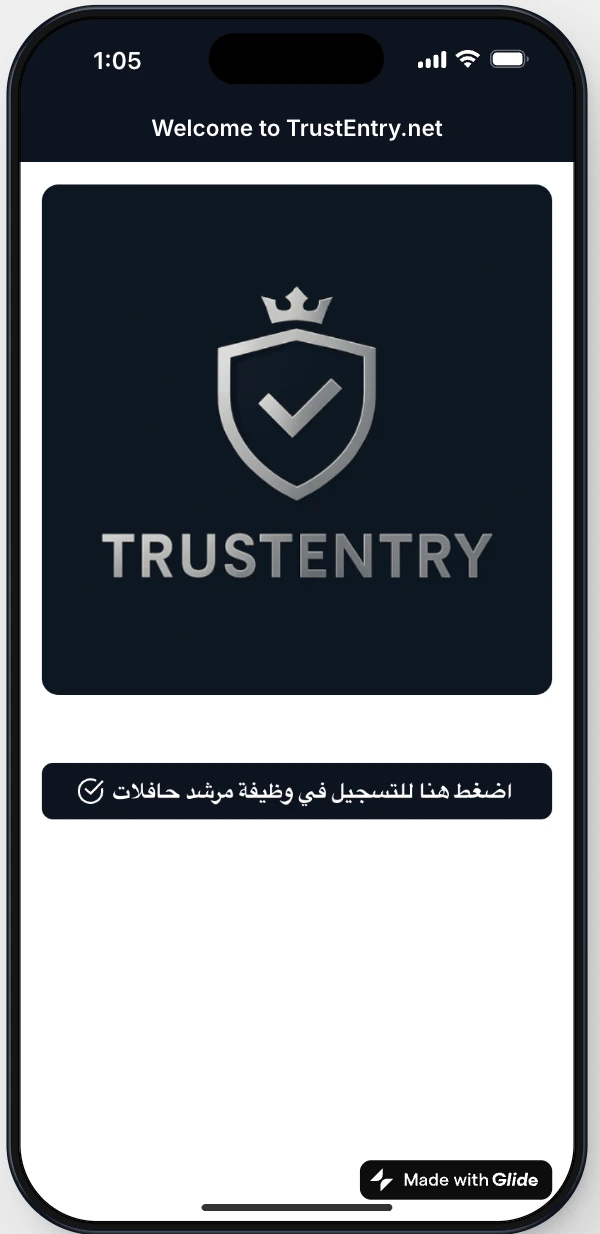
1Welcome Starts a bus-guide application.
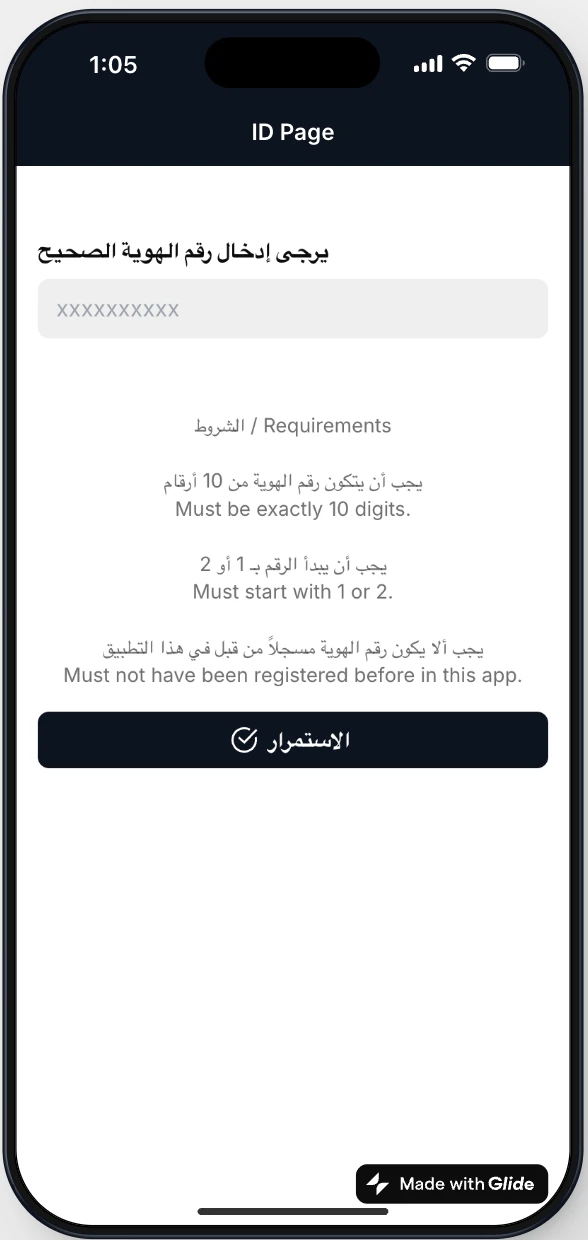
2Identification number Exactly 10 digits, starting with 1 or 2, and not already registered.
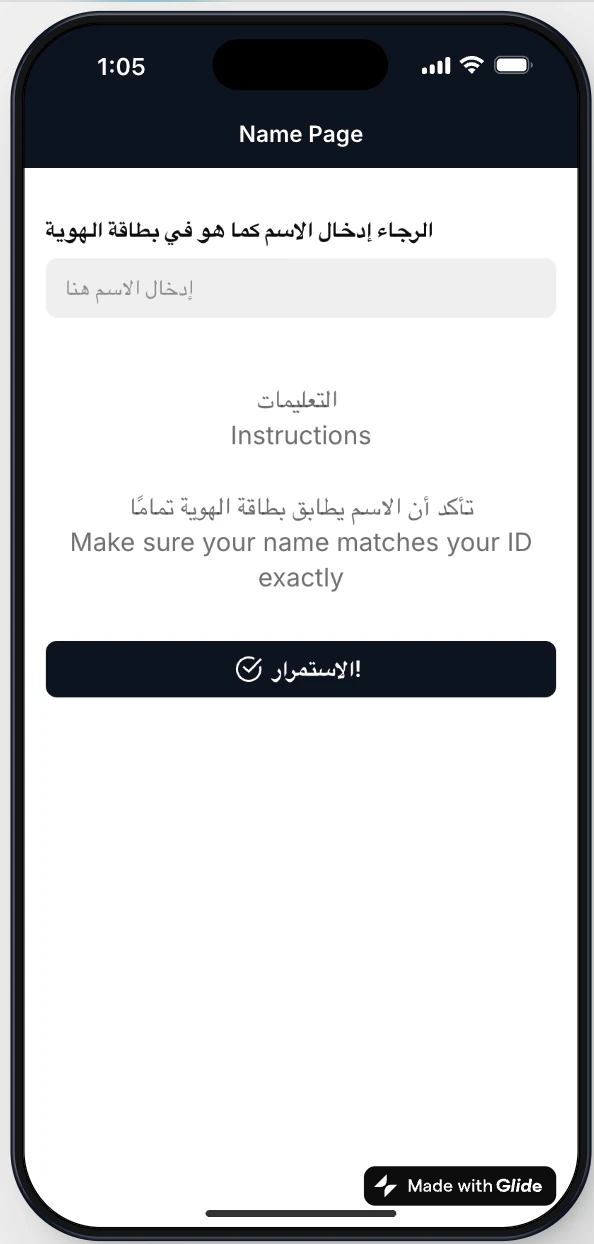
3Name Entered exactly as it appears on the ID card.
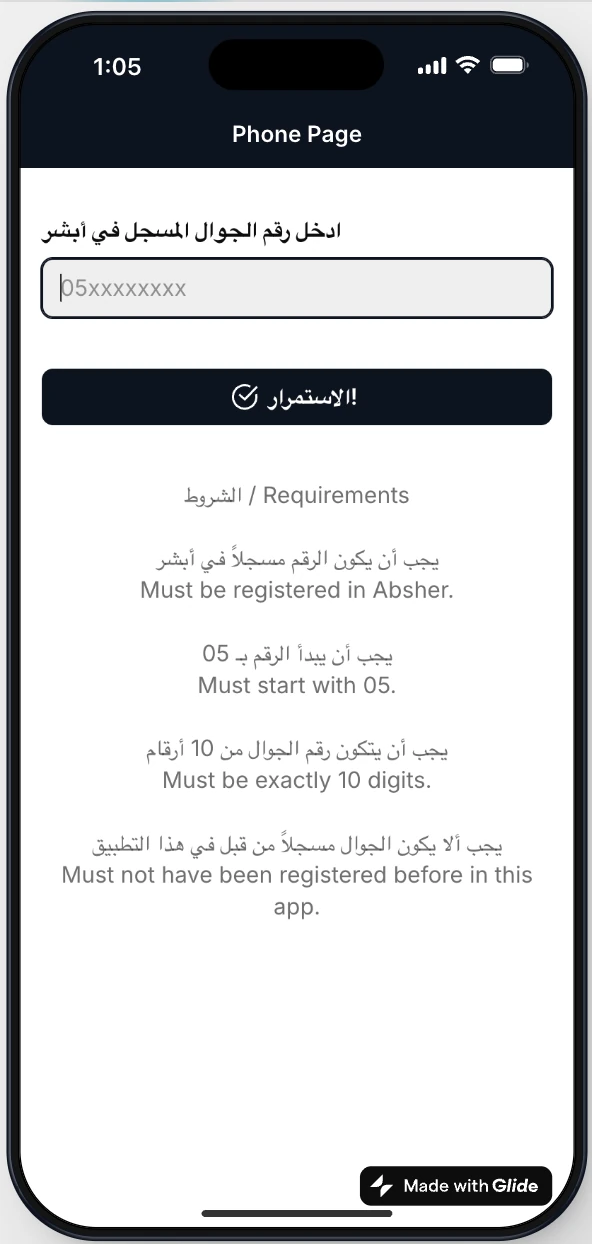
4Mobile number The number registered with Absher: 10 digits, starting with 05, and not already registered.
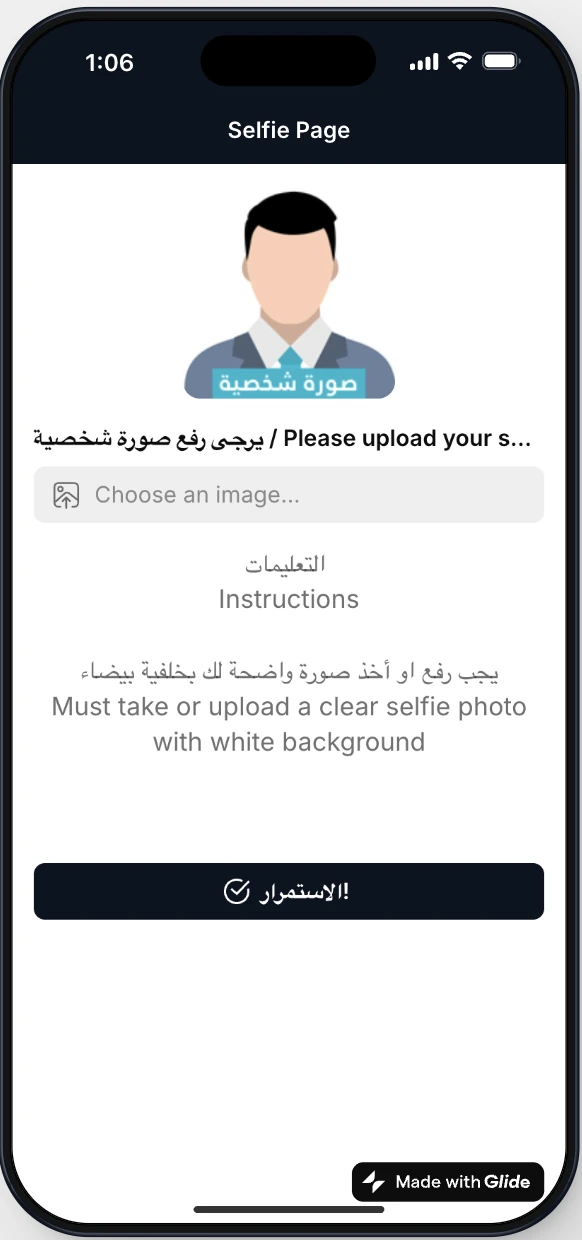
5Personal photograph Taken or uploaded against a white background.
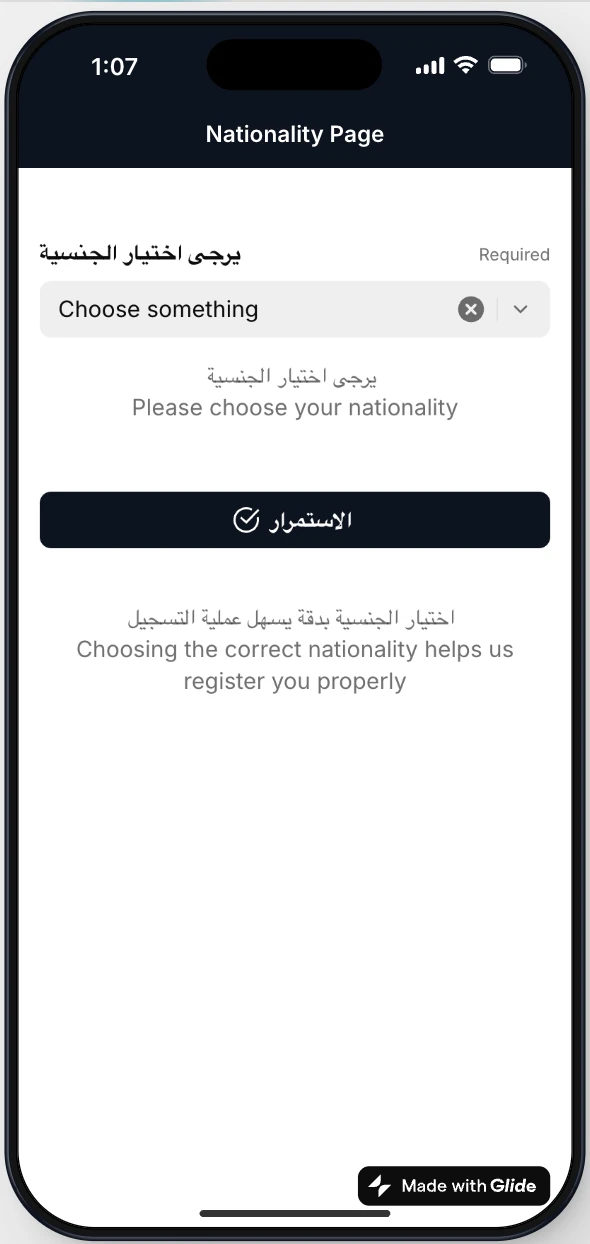
6Nationality Chosen from a list.
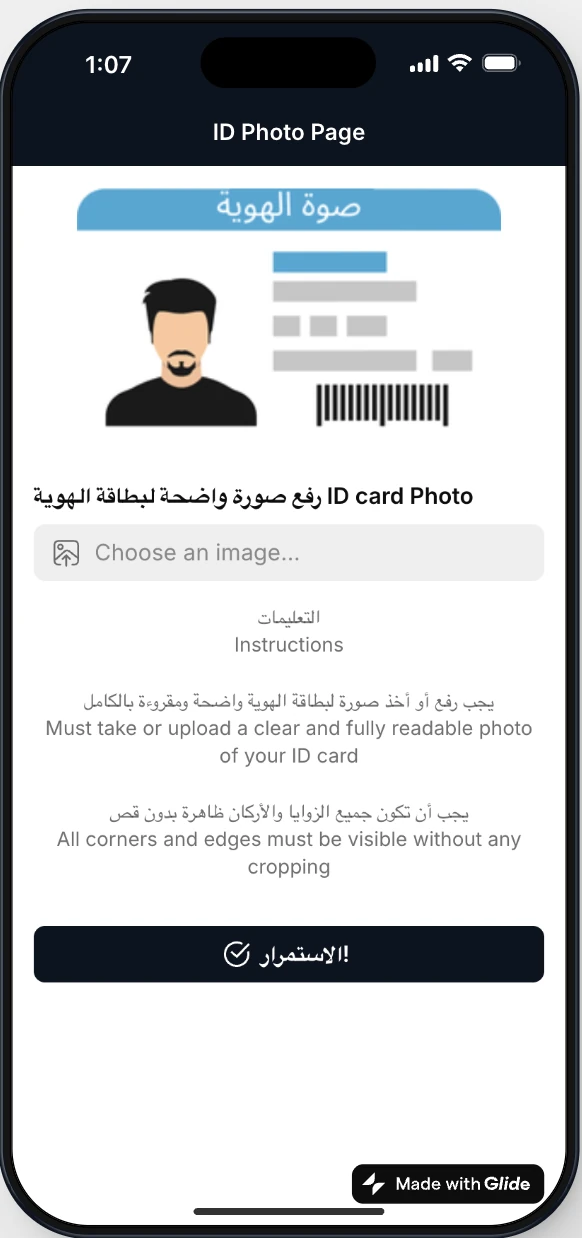
7ID card photograph Clear and readable, with every corner and edge visible.
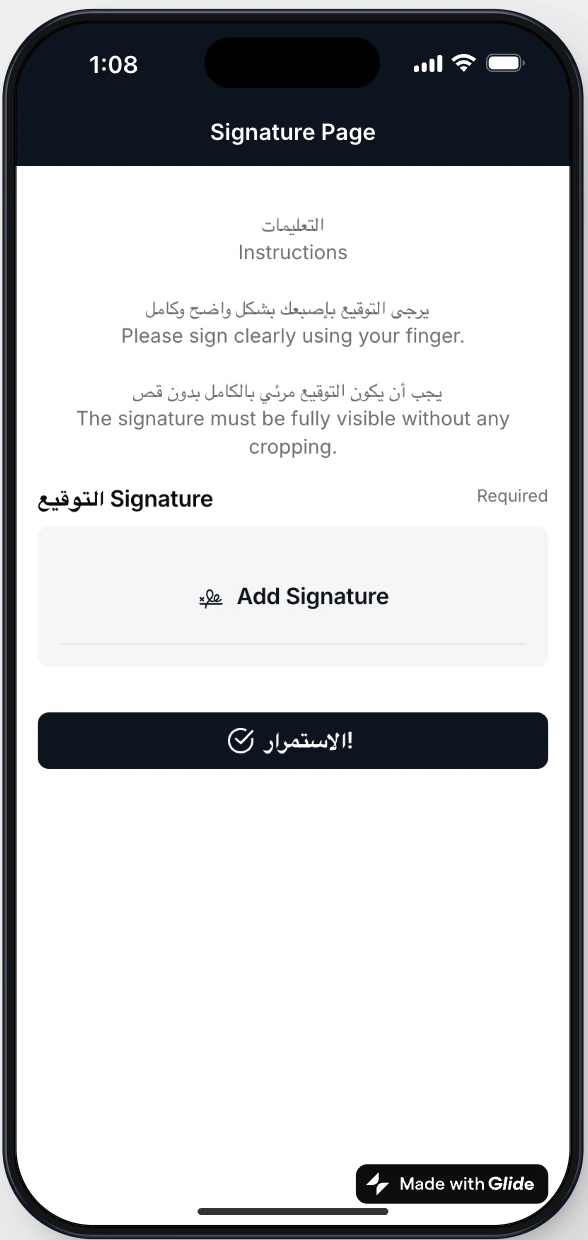
8Signature Drawn by hand on the screen and fully visible.
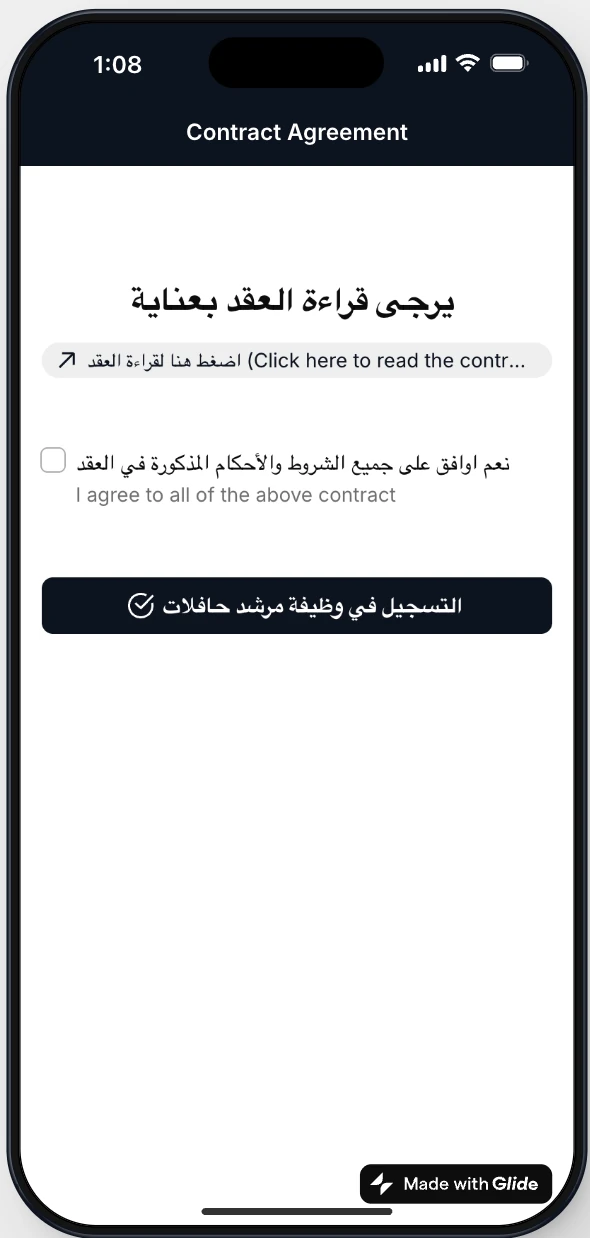
9Contract Read, explicitly accepted, then submitted.
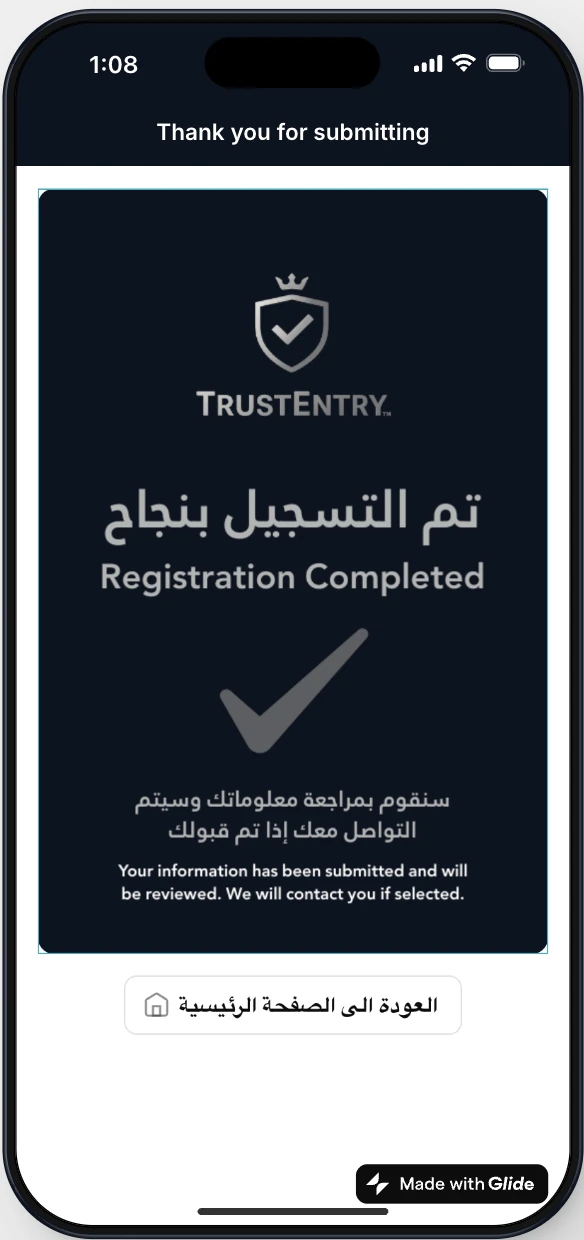
10Confirmation The application is received for review.
My role
I identified the problem, designed the registration workflow and its validation rules, built the application in Glide, and tested and refined it until the whole flow worked from welcome to confirmation.
What was planned next
An administrative dashboard for reviewing applications was planned as the next phase, to be developed if the relevant contract was secured. It was not built.
Intended benefits
Because TrustEntry was not deployed, these are design goals rather than measured results:
- Fewer duplicates, because identification and mobile numbers that are already registered are refused.
- Valid numbers, because their format is checked as they are entered.
- Complete applications, because the photographs, ID card image, signature and contract acceptance are collected in one guided flow.
- Less manual reconciliation, because problems are stopped before they reach the people processing applications.